Roadie Driver
- 3.9
- Rating
- 1.00M
- Installs
- Free
- Price

 Analysis by App-foxy
Roadie Driver is a business app for people who want to earn from deliveries that fit around routes they already plan to take. I approached it less like a courier service and more like a practical matching tool: the app puts delivery opportunities in front of drivers, while the driver decides which ones make sense. That distinction matters, because the experience depends heavily on your route, vehicle, schedule, and willingness to handle items for other people.
After using it, my overall impression is that Roadie Driver is most useful when treated as a route-planning companion rather than a guaranteed source of income. It can turn spare space in a car and an existing trip into an opportunity, but it is not a magic button for constant work. The strongest results come from being selective, reading each offer carefully, and keeping enough time available for pickup and drop-off complications.
How Roadie Driver fits into everyday delivery work
The app comes from Roadie, Inc. and sits in the business category. It is free to install, aimed at Everyone, and requires Android 12 or later. Its current version is 2.131.1, so anyone using an older phone should check compatibility before planning around it. The app has passed the one-million-install mark and holds a 3.9 average from roughly twenty-four thousand ratings, with about twelve thousand written reviews. Those figures suggest a substantial user base, but they also tell me to keep expectations realistic: this is an established tool, not necessarily a universally smooth experience.
You May Also Like

 Blood Strike: 2.5 Anniversary
Blood Strike’s Loadouts Turn Every Drop Into a Tactical Gamble
A close look at Blood Strike’s custom loadouts: how fast access to signature weapons reshapes its battle royale rhythm, rewards preparation, and narrows the gap between fights.

 Pandora - Music & Podcasts
Pandora’s Music Is Easy to Start, but Harder to Recover
Pandora’s strength is its low-effort path from a seed to a station. Its weak spot is how much confidence it asks you to place in connection, setup, and quiet recovery.

 8 Ball Pool
 Is Built on Rivalries, Rematches, and Routine
A close look at the rivalries, rematches, shared routines, and unanswered safety questions that turn a quick pool match into a persistent mobile community.

 Samsung Music
’s Quiet Strength Is Playing What You Already Own
Its reach comes less from spectacle than from dependable access to a personal library. That simplicity is both the app’s strongest retention engine and its ceiling.

 AccuWeather: Weather Radar
AccuWeather Review: A Quick, Clear Forecast for Everyday Decisions
For everyday plans, the best forecast is the one you can understand quickly. AccuWeather makes rain timing, radar, and local conditions easy to act on, with a few trade-offs.

 Hill Climb Racing
Why Hill Climb Racing Still Turns Crashes Into One More Run
A tiny car, a bumpy hill and one more upgrade: Hill Climb Racing keeps resurfacing because its simple chaos makes every near-miss feel personal.
More From Our News Desk



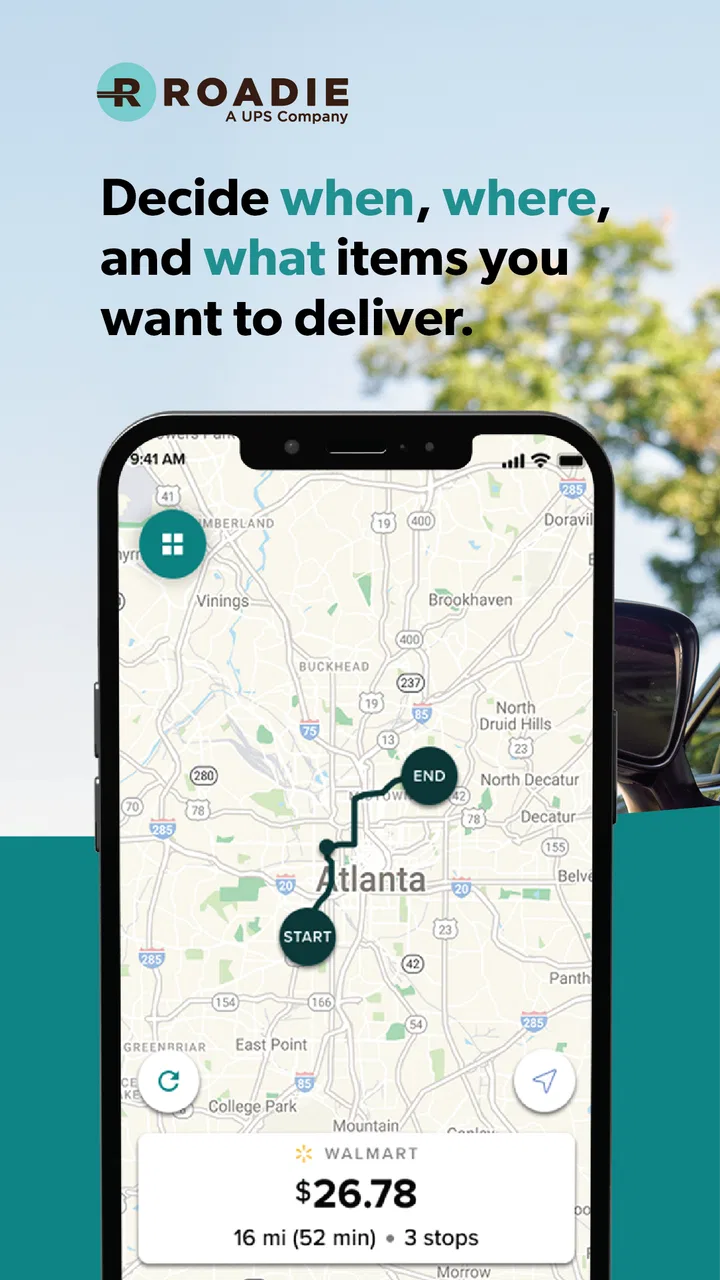
The basic idea is simple. A sender has an item that needs to travel somewhere, and a driver may already be heading in that direction. Roadie Driver brings those two sides together. For a driver, the central question is not simply whether a delivery is available. It is whether the pickup location, destination, item, timing, and compensation make sense as part of the day you already have planned.
A realistic example would be someone driving from a suburb into a nearby city for work. Rather than accepting the first offer that appears, I would compare the pickup with my departure point, check whether the destination is close to my normal endpoint, and think about how much extra waiting or detouring the job could create. A delivery that looks attractive in isolation can become poor value if it sends me away from my route or requires a long stop before work.
This is where the app differs from ordinary local courier alternatives. A conventional delivery platform may encourage drivers to stay active in a busy service area and wait for the next request. Roadie Driver makes more sense for people who prefer choosing individual jobs and combining them with journeys they are already making. That flexibility is valuable, but it also means the driver has more responsibility for judging the deal.
What I check before accepting a delivery
I would begin with the complete offer rather than focusing on the headline payment. The pickup and drop-off relationship is the first filter. If the two points are close to my route, the job may be efficient. If either one requires a meaningful detour, I would treat the extra fuel, time, parking, and vehicle wear as part of the real cost.
The item itself deserves equal attention. A small package that fits comfortably in the car is a different proposition from something awkward, fragile, bulky, or difficult to carry alone. Even when an offer appears convenient, I would avoid accepting it until I am comfortable with the practical handling involved. The app can help present a delivery opportunity, but the driver still has to make a sensible judgment about the vehicle and personal capacity.
Timing is another easily missed detail. A pickup that is technically on the way may still be a bad match if I have a fixed appointment or cannot wait. I found it more useful to think in terms of a time buffer rather than an exact schedule. That buffer protects the rest of the day when a sender is not ready, a location is difficult to find, or the final stop takes longer than expected.
The most important habit is to calculate the whole trip, not just the visible offer. I would consider the distance to the pickup, the delivery distance, the return journey if necessary, likely parking difficulty, and the value of my time. This approach prevents the app from turning an ordinary errand into an unprofitable detour.
Trust begins with visible choices, not promises
When I evaluate a delivery app, I do not judge trust only by how polished the screens look. I look for the moments where the app lets me understand what I am choosing: which delivery I am considering, where it begins and ends, and whether I can make a decision before committing. Roadie Driver works best when I slow down at those decision points instead of tapping through an offer automatically.
The driver is not merely receiving a route. The driver is agreeing to participate in a transaction involving another person’s property and schedule. That makes clear review of each job especially important. I would use the offer information as a checklist and avoid relying on memory when several deliveries appear during the same session.
Account control also matters. I would keep my profile information accurate, review the account screens periodically, and make sure I understand which details are needed to use the service. If I stopped driving, I would not leave the account unattended indefinitely. A clean account routine is a small step, but it gives me more control than treating the app as something that can simply remain installed without attention.
I also prefer making privacy decisions deliberately. Before granting any device access requested during setup or use, I would read the permission prompt and decide whether it is necessary for the action I am trying to perform. I would not approve access automatically just because the app is useful. If a permission is optional, I would rather begin with the narrowest choice and expand it only if a specific function genuinely requires it.
Data-sensitive moments during a delivery
Delivery work naturally involves sensitive moments. A driver may see pickup instructions, destination details, contact information, or notes about an item. That information should be treated as temporary working material, not something to copy into personal notes, share with friends, or leave visible on an unlocked phone.
My practical rule would be to disclose only what is needed to complete the delivery. I would avoid photographing labels or screens unless the workflow clearly requires it, and I would not discuss a recipient’s package in public. If I needed to contact someone, I would use the communication method provided within the delivery process rather than moving the conversation to a personal channel without a clear reason.
Location is another sensitive area. A driving app may need location-related access for route and delivery work, but I would still pay attention to when access is requested and whether the operating system offers a choice between limited and broader use. I would review those settings later rather than assuming the first selection should remain permanent.
There is also a physical privacy issue that is easy to overlook. A phone displaying a customer’s address can be seen by passengers, people at a fuel station, or anyone looking through the windshield. I would use a screen lock, avoid leaving the app open when stepping away, and keep delivery information out of sight when it is not needed. These habits are not glamorous, but they are more meaningful to trust than a reassuring slogan.
For the same reason, I would be cautious with screenshots. Screenshots can preserve addresses and instructions long after a job is complete, especially if automatic photo backup is enabled on the phone. Deleting unnecessary images and clearing temporary notes after finishing a delivery gives me a simple way to reduce exposure without interfering with the work itself.
Where the app gives the driver agency
The biggest advantage of Roadie Driver is the sense that I can choose work selectively instead of accepting every request that appears. That agency changes the way I would use the app. I would open it before a planned journey, compare available opportunities, and accept only those that fit the trip. This is more controlled than driving around aimlessly hoping a suitable request appears.
That control has a trade-off. Selectivity can mean waiting longer for a genuinely convenient job, and the app cannot make an unsuitable route attractive. Someone looking for a predictable schedule may prefer ordinary employment or a platform with more structured shifts. Someone who dislikes carrying goods, dealing with pickup uncertainty, or making independent cost calculations should probably skip this style of delivery work.
I would also avoid stacking deliveries too aggressively. Multiple jobs can look efficient when their destinations point in the same direction, but the plan becomes fragile if one pickup runs late. A better approach is to leave room between commitments and add another delivery only when the route remains manageable. The extra restraint may reduce the number of jobs completed, but it protects the reliability of the whole day.
Another useful workflow is to separate “route jobs” from “destination jobs.” A route job is one I would accept because it follows a trip I already need to make. A destination job is one I would take mainly for the delivery itself. I would demand a stronger reason for the second type, because it creates more exposure to fuel costs, traffic, and time lost returning home.
What can make the experience frustrating
Roadie Driver is not free from friction. The app’s value depends on the quality and convenience of the opportunities available to a particular driver, and that can vary by location and by day. A person may open it expecting a useful match and find that the available jobs do not align with the route, vehicle, or schedule. That is not necessarily an app failure, but it is a real limitation of the model.
There is also a mental workload that a simple store description does not reveal. I have to evaluate the offer, estimate the detour, think about parking, judge the item, protect the schedule, and keep delivery information private. Drivers who want the app to make every decision for them may find this tiring. The flexibility is genuine, but it comes with responsibility.
Navigation can be another weak point in any delivery workflow. An address may be correct while the practical entrance is confusing, or a large location may have several possible drop-off points. I would allow extra time for unfamiliar sites and avoid making a promise based on the fastest route shown on a map. A short distance does not always equal a quick delivery.
I would also keep expectations around earnings conservative. Since the app is free, the financial question is not the download cost; it is whether each accepted delivery remains worthwhile after the complete journey and the time involved. I would track fuel and mileage privately for a while, then use that experience to set a personal minimum. Without that discipline, occasional convenient jobs can hide a pattern of weak returns.
Who should use it and who should look elsewhere
Roadie Driver is a strong fit for drivers with flexible schedules, reliable transportation, and regular journeys that pass through populated areas. It may suit someone who already commutes, visits family, travels between towns, or makes frequent trips for another reason. In those situations, the app can help turn unused vehicle capacity into something productive without requiring the driver to organize a separate delivery business from scratch.
It is less suitable for someone who needs guaranteed daily work, dislikes uncertainty, or has a vehicle with very limited space. It is also a poor match for anyone who would feel pressured to accept deliveries that create uncomfortable detours or rushed handoffs. The ability to decline is important, but it only helps if the driver is willing to use it.
Compared with a traditional courier company, Roadie Driver offers more independence and less predictable structure. Compared with general gig-delivery apps, it encourages a different mindset: matching deliveries to trips rather than treating every hour as an open-ended delivery shift. Compared with simply mailing an item, it can be more convenient for a sender when a suitable driver is already traveling nearby, but the driver’s route and availability become central to the experience.
My approach to using it responsibly
I would begin with a small number of deliveries and use them to learn the workflow rather than immediately building my schedule around the app. Before each acceptance, I would confirm the route, item requirements, timing, and practical access. After completing the job, I would note the actual time and distance privately. That record would tell me more about whether the app suits my routine than a single attractive offer.
I would also keep the app and phone itself organized. A strong passcode, current operating-system security, careful permission choices, and removal of old delivery screenshots are sensible basics. I would review account controls whenever my phone, vehicle, or work pattern changed. These steps do not guarantee a perfect experience, but they give me a clearer boundary between delivery work and personal information.
If a delivery created confusion, I would pause rather than improvise with someone else’s property. I would use the available in-app process, preserve only the information needed to explain the issue, and avoid sharing customer details elsewhere. That approach protects both the recipient and me, especially when a route, address, or handoff does not go as expected.
My final view of Roadie Driver
Roadie Driver is worth trying when your existing routes are the main reason to drive. Its free entry point and flexible delivery-by-choice model make it appealing to people who want occasional opportunities without committing to a fixed shift. I like the idea of evaluating each job on its real-world fit, and the app is most convincing when it helps a driver make that decision calmly.
My caution is equally important: do not confuse availability with profitability. The right delivery can fit neatly into a planned trip, while the wrong one can consume time, fuel, attention, and privacy for little practical benefit. I would use the app selectively, keep personal records, protect delivery information, and maintain enough schedule space to handle surprises.
With that mindset, Roadie Driver feels like a useful business tool rather than a promise of effortless income. I would recommend it to an independent, route-conscious driver who values choice and can judge trade-offs. I would point someone seeking predictable hours toward a more structured alternative. The app earns trust not by removing every uncertainty, but by giving the driver a chance to make informed choices and remain responsible for the ones that matter.
FAQs for Roadie Driver
01What is Roadie Driver, and how does it work?
Roadie Driver is a delivery app that connects drivers with local gigs for transporting items. Once you sign up and pass a background check, you can browse available gigs and choose those that fit your schedule. The app provides navigation and customer communication tools to ensure smooth pickups and deliveries.
02How do I sign up to become a Roadie Driver?
To sign up, download the Roadie Driver app from the App Store or Google Play. Complete the registration process by providing your personal information, including a valid driver's license. You'll also need to pass a background check. Once approved, you can start accepting delivery gigs in your area.
03What are the vehicle requirements for Roadie Driver?
Roadie Driver accommodates a wide range of vehicles, from sedans to larger trucks. Specific gigs may have their own vehicle requirements based on the size and type of the item being delivered. Ensure your vehicle is in good working condition and meets any additional requirements specified in the gig details.
04How does payment work for Roadie Drivers?
Drivers are paid per gig, with earnings varying based on the distance and complexity of the delivery. Payments are processed directly through the app and are typically transferred to your bank account weekly. You can track your earnings and past deliveries within the app for convenient financial management.
05What kind of support does Roadie Driver offer to its users?
Roadie Driver provides comprehensive support through in-app resources, FAQs, and direct customer service. If you encounter issues during a delivery, you can contact support via the app for assistance. The platform is designed to facilitate easy communication between drivers and the Roadie support team to resolve any problems efficiently.
Pros
- User-friendly interface for easy navigation.
- Real-time job notifications boost efficiency.
- Flexible scheduling to fit any lifestyle.
- In-app navigation is accurate and reliable.
- Solid customer support for quick issue resolution.
Cons
- Limited availability in smaller cities.
- Earnings can fluctuate based on demand.
- Occasional app crashes disrupt workflow.
- High competition during peak hours.
- Battery drain due to constant GPS use.

Roadie Driver
Gallery